Rubbish clearance costs Bermondsey get accurate quotes
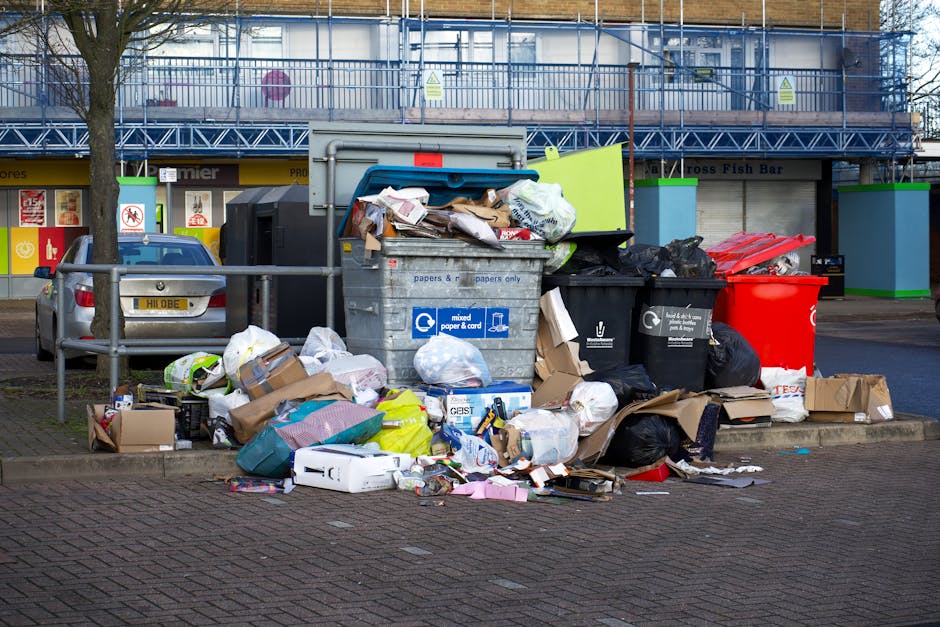
If you are trying to make sense of rubbish clearance costs in Bermondsey and want to get accurate quotes, you are probably dealing with a pile of stuff that is bigger, heavier, or more awkward than it first looked. Happens all the time. One bag turns into five, a broken wardrobe becomes a van-load, and suddenly the price you were expecting no longer feels meaningful.
This guide explains how rubbish clearance pricing usually works, what affects the final quote, how to compare offers without getting caught out, and the practical steps that lead to a fairer figure. You will also find a checklist, a real-world style example, and a simple comparison table so you can judge quotes with a bit more confidence. If you want a broader look at how the team handles clearances across different property types, you may also find the pricing and quotes page useful alongside this article.
Truth be told, the cheapest quote is not always the best one. The useful question is: what exactly is included, and does the company need more information before they can price the job properly?
Why Rubbish clearance costs Bermondsey get accurate quotes Matters
Getting an accurate quote is not just about saving money, although that helps. It also avoids the awkward moment when the crew arrives, looks at the waste, and says the original price only covered half the job. No one enjoys that conversation, and to be fair, it usually happens because the quote was rushed or the description was too vague.
In Bermondsey, where homes and workplaces can range from compact flats to larger converted properties and busy commercial units, rubbish clearance jobs are often more varied than they first appear. A hallway full of furniture, a basement with builders' waste, or a small office strip-out can all require different labour, loading time, and disposal arrangements. If the quote does not reflect that, the end result is usually friction.
Accurate pricing matters because it helps you compare like with like. A proper quote should account for the volume of rubbish, access, labour, lifting, parking, and disposal. Without those details, you are comparing rough guesses rather than real offers. That is not a great way to choose a service, especially if you need the work done quickly.
Expert summary: the best rubbish clearance quotes are specific, itemised where possible, and based on the actual job rather than a quick assumption. The more the provider understands upfront, the less chance there is of surprises later.
It is also worth remembering that a reliable company will ask questions. That is a good sign, not a nuisance. If someone gives you a firm price in ten seconds flat without asking what needs removing, how it is accessed, or whether there are stairs, you should probably pause. Just a little.
How Rubbish clearance costs Bermondsey get accurate quotes Works
Most rubbish clearance quotes are built from a few core ingredients. Think of it as a practical estimate rather than a mystery calculation. The clearer your description, the more accurate the figure will be.
Here is what usually goes into a quote:
- Volume of rubbish - how much space the waste will take in the van or truck.
- Type of waste - general household rubbish, furniture, garden waste, builders' debris, or mixed items.
- Labour required - whether items are already at the kerb, in a loft, up several flights of stairs, or need careful dismantling.
- Access conditions - parking distance, narrow hallways, controlled entry, no lift, or awkward loading routes.
- Time on site - larger or more fiddly jobs can take longer than people expect.
- Disposal route - different waste streams may need different handling, sorting, or recycling arrangements.
Some companies quote by load size, some by item, and some by the time and labour involved. None of those methods are automatically wrong. The important thing is that the method matches the job and is explained clearly before work begins. If you also need a more general waste service rather than a one-off clear-out, the waste removal page gives a good sense of how broader clearance work is approached.
There is another part people sometimes miss: photos. A few clear photos, taken in daylight if possible, can make a big difference. One picture of the main pile, one of the access route, and one of anything unusual such as a piano, a broken wardrobe, or building rubble can save a lot of back-and-forth. It sounds almost too simple, but it works.
If the job involves a home, a flat, or a mix of furniture and everyday clutter, that detail matters too. Services such as house clearance, home clearance, or flat clearance can involve different access issues and disposal categories, so the quote should reflect the actual setting rather than just the item count.
Key Benefits and Practical Advantages
When you get a properly priced rubbish clearance quote, the benefits are not only financial. The whole process feels calmer. You know what is included, what might cost extra, and what the likely outcome will be. That sort of certainty is worth a lot on a busy day.
- Fewer surprises - a detailed quote reduces the risk of add-on charges.
- Better budgeting - you can plan around a realistic figure rather than a guess.
- Faster decision-making - once the scope is clear, comparing providers becomes much easier.
- Cleaner handover - whether it is a flat, garage, loft, or office, you know what will be removed and when.
- More trust - transparent pricing tends to go hand in hand with better communication.
There is also a practical emotional benefit, if that is not too grand a way of putting it. A cluttered room can feel strangely heavy. Once the waste is identified, quoted, and scheduled, the job stops hanging over you. The place may still look messy for the moment, but at least it has a plan. And honestly, that is often half the battle.
If you are dealing with old chairs, tables, sofas, or mixed household items, you may also want to look at dedicated services such as furniture clearance or furniture disposal. Those pages are useful when the rubbish is really a mix of bulky items rather than loose waste in black bags.
Who This Is For and When It Makes Sense
This topic is relevant to a lot of people, more than you might think. You do not need a huge clearance to care about accurate pricing. A small pile can be surprisingly tricky if it includes awkward items or difficult access.
It makes sense if you are:
- clearing out a flat before or after a move
- getting rid of unwanted furniture
- emptying a loft, garage, or shed
- managing garden waste after a tidy-up
- removing builders' rubble after a small renovation
- sorting out office clutter or old equipment
- helping a relative downsize and needing the job handled with care
If that sounds familiar, you are in the right place. Bermondsey has plenty of properties where access can be the deciding factor. A job that looks minor at street level might involve three flights of stairs, shared entryways, or a parking restriction that adds time and effort. This is where accurate quoting really earns its keep.
For business users, the stakes can be a bit different. Office clearances and waste disposal often need to be scheduled around working hours, which means timing and efficiency matter as much as price. If that is your situation, the office clearance and business waste removal pages are helpful reference points.
And yes, sometimes the need is as simple as: "I cannot face doing this myself." That is valid. Life is busy enough already.
Step-by-Step Guidance
To get a quote that is genuinely useful, do the job in a sensible order. The aim is not perfection. The aim is enough clarity for a provider to price accurately without visiting twice.
- List what needs removing. Write it down in plain English. "Old sofa, dismantled wardrobe, two mattresses, six bin bags, and some broken shelving" is better than "a bit of rubbish."
- Separate what stays from what goes. If some items are being kept, move them or mark them clearly. It is easy for a quote to become inflated if the pile is unclear.
- Take a few honest photos. Include wide shots and close-ups. Do not hide the awkward bit behind the door. Better to be open now than surprised later.
- Note access details. Mention stairs, lifts, parking, narrow corridors, restricted entry, or long carrying distances.
- Say whether any items are heavy or fragile. A cast-iron bath is not the same as a pile of cardboard. Obvious, yes, but it still gets missed.
- Ask what the quote includes. Labour, disposal, VAT if applicable, loading time, and any extra charges should be clear.
- Compare at least two quotes. Not to chase the lowest one automatically, but to see whether the pricing is sensible and consistent.
- Confirm the service scope before the booking. You want the final arrangement in writing or clearly documented so there is no confusion later.
If the job involves a loft, garage, or garden, be specific. Those spaces have a knack for collecting odd things that do not show up well in one photo. For example, lofts often include boxes, broken decorations, forgotten suitcases, and the occasional mystery object no one wants to claim. If that sounds familiar, the relevant pages for loft clearance, garage clearance, and garden clearance are worth reviewing.
Expert Tips for Better Results
A few small habits can improve quote accuracy more than people expect. These are the kinds of details that save time, and sometimes a decent bit of money too.
- Be specific about mixed waste. General rubbish, wood, metal, furniture, plasterboard, and soil are not all treated the same way.
- Show scale in photos. A photo with a chair or bin bag in it helps the provider judge volume.
- Tell the truth about access. If parking is awkward or the lift is out of order, say so. It is better than a revised quote on arrival.
- Ask how the company handles recycling. If sustainability matters to you, ask directly. A responsible clearance firm should be able to explain its approach clearly. The recycling and sustainability page is a useful place to start.
- Check payment details early. Good providers are usually transparent about methods and security. If you are unsure, the payment and security page may help.
One more thing: if you have a job that is half clearance, half furniture removal, say so. People often split these categories in their own head, but the provider still has to send the right crew and vehicle. That distinction matters. A lot.
Also, do not be afraid to ask a "basic" question. Basic questions are often the most useful ones. How long will it take? Will the room be left swept? Is there a minimum charge? Those are sensible, adult questions, not annoying ones.
Common Mistakes to Avoid
The biggest pricing errors usually come from missing information, rushed assumptions, or comparing quotes that are not really comparable. It is easy to do, especially if you are in a hurry and just want the mess gone by Friday.
- Giving a vague description. "A few things" rarely helps anybody.
- Forgetting access details. Stairs, parking, and distance from the property can change the quote.
- Not mentioning bulky or heavy items. Sofas, wardrobes, white goods, and rubble can all affect labour time.
- Assuming every quote includes the same things. Some quotes are all-in, others are not.
- Ignoring disposal type. Green waste, builders' waste, and general waste can be handled differently.
- Choosing purely on headline price. That usually leads to awkward surprises. Funny in theory, less funny on the day.
Another common mistake is failing to check whether the provider can handle the exact kind of job you need. A company that is great at domestic rubbish may not be the best fit for a commercial strip-out, and vice versa. If you need a more structured clearance, such as a builders' waste clearance or a more extensive house clearance, ask for pricing that reflects that scope.
One small but important note: do not "average out" your own estimate too aggressively. If you think it is probably two van loads, say that, but also say why. A rough guess is fine if it is labelled as such. Pretending it is certain is where the trouble starts.
Tools, Resources and Recommendations
You do not need fancy tools to get a better quote. A phone, a short list, and a few honest photos are usually enough. Still, there are a few practical resources worth using.
- Photo notes on your phone - keep a simple album of the items and the access route.
- Room-by-room list - especially useful for larger home or office clearances.
- Basic measurements - rough height, width, or depth can help with bulky furniture.
- Priority order - if some items must be removed first, state that upfront.
- Service pages for comparison - if your job includes a specific type of clearance, review the relevant service page before asking for a quote.
Useful pages on the site include furniture clearance, garden clearance, garage clearance, and builders' waste clearance. They help you match the service to the actual job instead of squeezing everything into one vague category.
If you are comparing providers, also look for details about the company itself. A clear about us page, straightforward terms and conditions, and visible operational policies usually indicate a more organised business. Not glamorous, maybe, but very useful.
Law, Compliance, Standards, or Best Practice
For rubbish clearance in the UK, the key point is that waste should be handled responsibly and by a provider that follows proper waste management practice. You do not need to become a compliance expert to book a clearance, but it is sensible to work with a company that can explain how waste is collected, transported, and disposed of.
Good practice usually includes:
- clear identification of the waste type
- safe loading and lifting methods
- reasonable care for the property during removal
- sorting for reuse or recycling where appropriate
- transparent pricing before work begins
If the job involves sharp, heavy, dusty, or awkward materials, safe handling becomes even more important. That is especially true in stairwells, narrow hallways, and shared buildings where damage or injury would be a real headache. For that reason, it is sensible to review a company's approach to health and safety and insurance and safety before you book.
For businesses, there can also be extra expectations around access, timing, and record keeping. If your workplace is involved, the service should feel tidy, efficient, and professional. A good clearance is not only about removing waste; it is about leaving the space in a usable state without drama.
Options, Methods, or Comparison Table
Not every clearance job needs the same approach. Some people want a quick van-and-team visit. Others need a more considered itemised process. Here is a simple comparison to help you think it through.
| Method | Best for | What it does well | What to watch for |
|---|---|---|---|
| Photo-based quote | Most domestic clearances and mixed loads | Quick, convenient, and usually enough for a fair estimate | Only works well if the photos are honest and clear |
| Itemised quote | Furniture, office items, or jobs with specific bulky pieces | Clearer for comparing exact items and likely labour | Can take a bit more time to prepare |
| Site visit | Large, awkward, or access-heavy jobs | Most accurate when the situation is complex | Slower to arrange, though often worth it |
| Fixed-load estimate | General rubbish with a fairly predictable volume | Simple and easy to understand | Make sure the load size truly matches the waste |
In practice, the best option depends on the job. A small loft clear-out may be well suited to photos and a quick estimate. A mixed office clearance with filing cabinets, desks, and electronics may need a more detailed breakdown. If you are unsure, ask the provider which quoting method gives the most reliable result for your type of waste.
Case Study or Real-World Example
Here is a simple real-world style example. A Bermondsey resident clears a one-bedroom flat after replacing furniture. The waste includes a sofa, bed frame, mattress, two small tables, and several bags of mixed household items. At first glance, it looks like a modest job. Then you notice the flat is on an upper floor, the stairwell is narrow, and parking is not exactly generous. Classic.
If the resident sends only a one-line message saying "need rubbish removed," the quote will almost certainly be vague. But if they send a list, a few photos, and the access details, the provider can factor in labour and loading properly. The result is usually a quote that feels realistic rather than guessed.
That same principle applies to more cluttered jobs. A garage with old garden tools, paint tins, and broken shelving is not the same as a pile of bagged rubbish on the driveway. Nor is a small office tidy-up the same as a full strip-out. The more the job is described like it actually is, the more accurate the quote becomes. Simple, but easy to get wrong when you are in a rush.
For a fuller service view, it may help to compare the relevant pages for flat clearance, home clearance, or office clearance depending on the setting. Different spaces, different headaches.
Practical Checklist
Use this checklist before requesting a quote. It is short, but it covers the details that usually matter most.
- Have I listed every item that needs removing?
- Have I separated waste that is staying from waste that is going?
- Do I have clear photos of the main pile and access route?
- Have I mentioned stairs, parking, lifts, or long carrying distances?
- Have I said whether anything is very heavy, awkward, or fragile?
- Do I know whether the job includes labour, loading, and disposal?
- Have I asked whether the quote is fixed or could change after inspection?
- Have I checked whether the provider handles my type of waste?
- Have I reviewed any relevant service, policy, or pricing pages?
- Am I comparing quotes on the same basis, not mixing up different scopes?
Most people only need a few minutes to prepare all this. It is not a big production. But it does make a difference, especially if you want the process to feel straightforward rather than slightly chaotic.
Get a free quote today and see how much you can save.
Conclusion
Getting accurate rubbish clearance quotes in Bermondsey comes down to clarity, honesty, and a bit of preparation. The more accurately you describe the waste, the better the quote will reflect the real job. That means fewer surprises, less stress, and a smoother clearance day overall.
Whether you are clearing a flat, a loft, an office, or a pile of garden waste, the best next step is always the same: gather the details, take a few good photos, and ask for a quote that actually matches the task. Do that, and you are already ahead of most people. Not glamorous, but effective.
If the job feels a bit overwhelming, start small. One room, one pile, one clear description. Then build from there. It tends to work better than staring at everything at once and hoping the problem solves itself. It rarely does, annoyingly.
And when it is all gone, there is a quiet relief to the room. You notice the space again. That is a good feeling.
Frequently Asked Questions
How do I get an accurate rubbish clearance quote in Bermondsey?
Give a clear list of items, a few honest photos, and the access details. Mention stairs, parking, and anything bulky or awkward. The more specific you are, the more accurate the quote will be.
Why do rubbish clearance prices vary so much?
Prices vary because jobs are not all the same. Volume, labour, access, waste type, and disposal needs can all change the amount of time and vehicle space required.
Is the cheapest quote usually the best value?
Not always. A very low quote may leave out labour, disposal, or access costs. It is usually better to compare what is included rather than focusing on the headline price alone.
Should I send photos before asking for a quote?
Yes, if you can. Photos help the provider judge the amount of waste and the access route. A couple of wide shots and one or two close-ups often do the job.
What if my rubbish is mixed with furniture and other bulky items?
Say so upfront. Mixed loads are common, but they need to be priced properly. Furniture, general rubbish, and heavier waste can affect the labour and disposal method.
Can a quote change on the day?
It can, but only if the actual job is materially different from the description you gave. If you are transparent from the start, the risk of a change is much lower.
Do I need a site visit for every clearance?
No. Many smaller jobs can be quoted from photos and a description. Larger or more complicated jobs may benefit from a site visit if access or volume is unclear.
How do I know if a provider is reputable?
Look for clear pricing information, straightforward terms, sensible safety information, and a professional approach to communication. Pages such as about us, terms and conditions, and insurance and safety can help you judge that.
What information should I have ready before requesting a quote?
Have a list of items, rough photos, the property type, the floor level, parking details, and any timing constraints. If you know whether the waste is general, furniture, garden, or builders' waste, include that too.
What if I only need part of a room cleared?
That is fine. Just make it very clear which items are going and which are staying. Partial clearances are common and can still be priced accurately if the scope is explained well.
Are recycling and responsible disposal part of good clearance practice?
Yes. Responsible sorting and disposal are part of proper waste handling. If sustainability matters to you, ask how the provider manages recyclable materials and review the company's approach to recycling and sustainability.
What is the easiest way to compare two quotes fairly?
Check whether both quotes cover the same waste, labour, access, and disposal. If one is vague and the other is detailed, they are not truly comparable until you level the detail.
When should I book a rubbish clearance service?
As soon as you know the scope of the job. If there is a deadline, such as a move, renovation, or tenancy change, booking early gives you more choice and usually a calmer process.
If you would like to speak to the team or ask about a specific clearance, the most direct next step is to use the site's contact options and share a few photos plus a short description. A clear enquiry usually leads to a clearer answer, which is half the job done already. Sometimes it really is that simple.